Wire Cheese Slicer vs Knife: Which One Should You Choose?
Cutting cheese sounds simple. Take a block, grab a knife, and slice it. But if you have ever tried to make several even slices for a sandwich, cheese board, or family gathering, you already know that it is not always that easy.
Some cheeses stick to the knife. Others crumble when you apply too much pressure. Sometimes you end up with slices that are much thicker on one side than the other.
This is where a wire cheese slicer can make a real difference.
But does that mean you should stop using a knife? Not at all. Both tools have their place in the kitchen. The better choice depends on the type of cheese you are cutting, the kind of slices you want, and how often you prepare cheese.
What Makes a Wire Cheese Slicer Different?
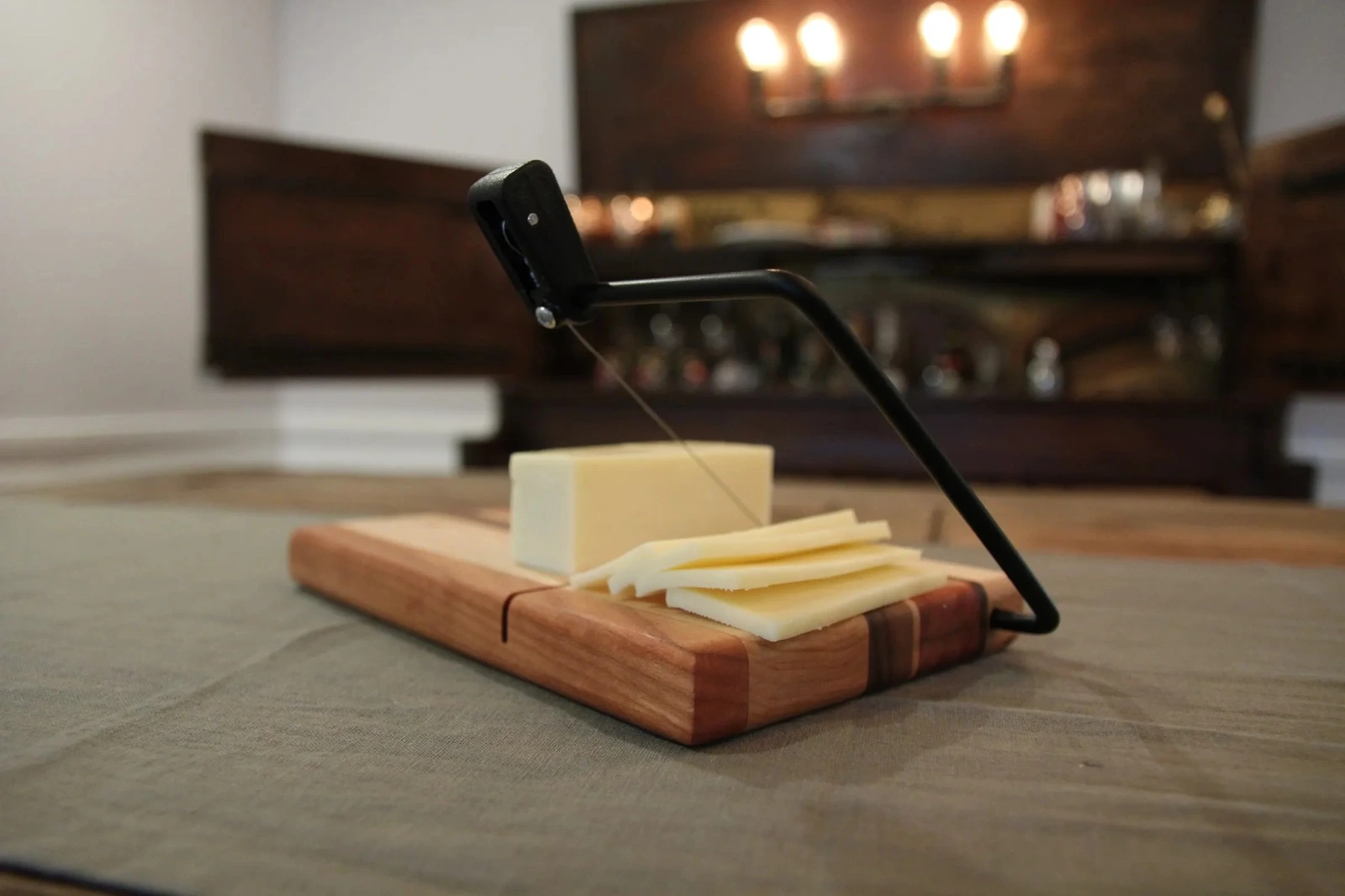
A wire cheese slicer uses a thin cutting wire instead of a traditional blade. You place the wire against the cheese and pull it through the block with steady pressure.
The result is usually a clean and even slice without the same amount of pressure that you would need with a knife. Wire slicers are especially useful for semi firm and firm cheeses where you want slices that look consistent.
One of the biggest advantages is control. If you want several slices that are close to the same thickness, a wire slicer makes that much easier.
This can be especially helpful when preparing cheese for sandwiches, snacks, appetizers, or a cheese board.
Why Use a Knife for Cheese?
A knife is the most familiar option. Most kitchens already have one, so there is no need to buy another tool.
A good kitchen knife can handle many different types of cheese. It can cut thick pieces, small chunks, wedges, and portions of different sizes. A knife is also useful when you want more control over the shape of each piece.
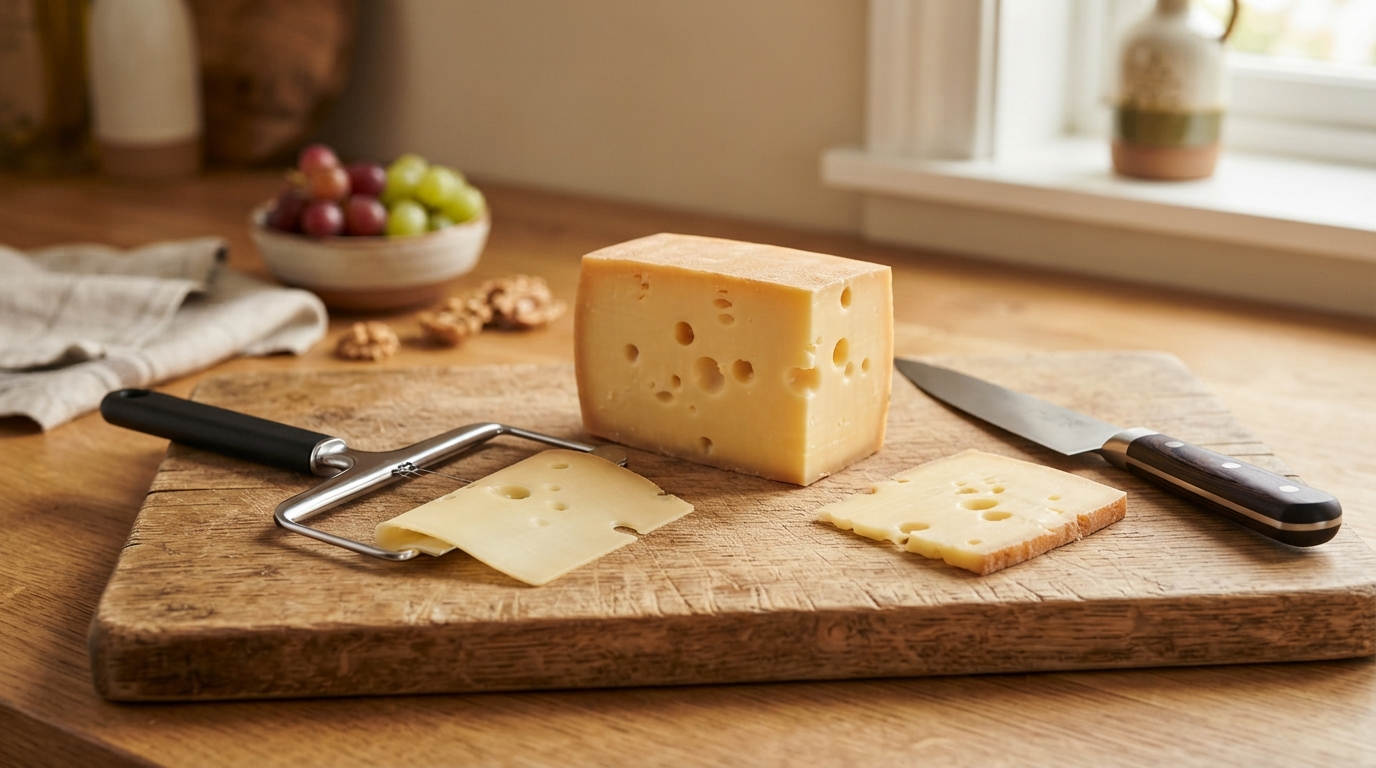
For soft cheeses, a suitable cheese knife or a thin sharp knife can work very well. Some cheese knives have holes in the blade that help reduce sticking when cutting soft cheese.
A knife also gives you flexibility. You can cut a large block into smaller sections, create wedges, or break hard cheeses into smaller pieces.
So if you already have a good knife and do not need perfectly even slices, there may be no reason to buy a separate slicer.
When a Wire Cheese Slicer Is the Better Choice
There are a few situations where a wire cheese slicer has a clear advantage.
You Want Even Slices
If you regularly slice cheddar, gouda, colby, or similar cheeses for sandwiches and snacks, getting consistent slices can be difficult with a knife.
A wire slicer makes the process simpler. You can guide the wire through the cheese and create slices that are much closer in thickness.
This is useful when presentation matters too. A neat cheese board looks better when the slices have a consistent appearance.
You Are Cutting Semi Firm Cheese
Semi firm cheese is often where a wire slicer really shines. A knife can work, but the cheese may stick to the blade or require more pressure than you expect.
A wire can pass through the cheese without the same dragging motion. This can help keep the slice intact and reduce crumbling.
You Prepare Cheese Often
If cheese is a regular part of your meals or you frequently entertain guests, a dedicated slicer can save time.
You do not need to reach for a large kitchen knife every time you want a few slices. Pick up the slicer, make your cuts, and you are done.
For someone who regularly prepares cheese boards, that small convenience can add up.
When a Knife Is the Better Choice
A knife is still the most useful tool in many situations.
You Need Different Shapes
A slicer is mainly designed for slicing. A knife can do much more.
You can cut wedges, cubes, thick pieces, thin pieces, and irregular portions. If you are preparing a variety of cheeses for a party, a knife gives you more freedom.
You Are Cutting Very Soft Cheese
Soft cheeses can be tricky for any cutting tool. Depending on the cheese, a suitable cheese knife may be a better choice than a wire slicer.
For example, soft cheeses such as brie can stick to a regular blade. A thin knife or a cheese knife with holes can make the cut cleaner.
The key is not simply choosing between a wire and a knife. It is choosing the tool that matches the cheese.
You Already Have a Good Knife
There is also nothing wrong with keeping things simple.
If you rarely slice cheese and your kitchen knife already does the job, buying another tool may not be necessary. A sharp knife can handle many cheese cutting tasks without a problem.
Wire Slicer vs Knife: A Quick Comparison
Feature
Wire Cheese Slicer
Knife
Even slices
Excellent
Depends on skill
Thin slices
Very good
Good with practice
Wedges
Limited
Excellent
Cubes and chunks
Limited
Excellent
Semi firm cheese
Excellent
Good
Soft cheese
Depends on the model
Often better
Hard cheese
Good for suitable cheeses
Very good
Ease of use
Simple
Requires more control
Versatility
Mainly for slicing
Very versatile
Presentation
Great for even slices
Depends on technique
The choice becomes much easier when you think about how you actually eat and serve cheese.
What About Hard Cheese?
Hard cheese deserves a little more attention.
Very hard and aged cheeses are often better broken into pieces or cut with an appropriate knife rather than treated like a block of cheddar. A cheese knife or cleaver can be useful for firm cheeses, while some hard cheeses are naturally suited to being broken into smaller pieces.
If you regularly work with several types of cheese, it can make sense to have more than one tool available.
You do not have to choose one tool and forget the other.
Which One Is Easier to Use?
For simple slicing, a wire slicer can be easier for many people.
With a knife, you need to control the blade, maintain a consistent angle, and apply the right amount of pressure. That becomes easier with practice, but it still takes some skill.
A wire slicer removes some of that difficulty. You mainly need to position the wire and make a steady cut.
If you are someone who has trouble getting evenly sized slices with a knife, this can be a noticeable improvement.
If you want to learn more about the differences between the two main types of cheese slicers, take a look at our guide to wire and blade cheese slicers.
What Should You Choose?
So, which one should you buy?
If you mostly want even slices of semi firm or firm cheese, a wire cheese slicer is probably the better choice. It is simple, easy to use, and especially useful when consistent slices matter.
If you want to cut different shapes and sizes, a knife is more versatile. It can handle wedges, chunks, cubes, and many other cutting jobs.
And if you prepare many different types of cheese, there is no rule saying you can only have one.
In fact, having both can be the most practical option.
Use the wire slicer when you want quick, even slices. Use the knife when you need more control over the shape or size of the cheese.
The Right Tool Makes Cheese Prep Easier
You do not need a drawer full of specialty kitchen tools to enjoy good cheese. But having the right tool for the job can make a simple task much easier.
A knife remains one of the most useful tools in any kitchen. It is flexible, familiar, and capable of handling almost any cheese cutting task.
A wire cheese slicer, on the other hand, is a great choice when your main goal is clean, even slices with less effort.
The best choice comes down to your needs. If you love neat cheese slices and prepare cheese regularly, a wire slicer is worth considering. If you prefer variety and want one tool that can handle many different cutting jobs, stick with a good knife.
Either way, the goal is the same: make cutting cheese easier and enjoy the part that comes after it.
Choosing a cheese slicer may seem like a small decision. However, if you enjoy cheese boards, family dinners, or entertaining guests, the right slicer can
Finding the perfect wedding gift isn’t always easy. Many couples already have household essentials, making it difficult to choose something meaningful instead of another item
Finding the perfect wedding gift has become about more than simply checking an item off a registry. In 2026, Canadians are choosing personalized gifts that
When shopping for a cheese slicer, many buyers focus on the cutting mechanism and overlook an equally important factor: the material of the slicer itself.